Traveling India on a Shoestring: A Land Where Less Truly Is More
India has a peculiar way of rewarding the budget traveler. While five-star resorts charge you to manufacture a “local experience,” the real one is usually just outside, free for the taking. A ten-rupee cup of chai from a roadside stall, sipped while watching a city wake up, often beats anything served on a hotel terrace. This is the quiet secret of traveling India cheaply: the cheaper option is rarely the lesser one. It’s often the better one.
For travelers used to budgeting being a constraint, India flips the equation. Here, frugality isn’t a sacrifice you make to see the country — it’s frequently the very thing that lets you see it properly.
Where to Sleep Without Spending Much
Accommodation in India spans an enormous range, but the budget end is where the character lives. Hostels in cities like Jaipur, Varanasi, Rishikesh, and Goa typically run $4 to $10 a night, and many come with rooftop terraces, communal kitchens, and views that pricier hotels would charge double for. Dorm beds are common and a good way to meet other travelers heading in the same direction.
Religious guesthouses, known as dharamshalas, are another option worth knowing about. Found near temples and pilgrimage sites, they offer simple rooms for a few dollars a night, sometimes on a “pay what you can” basis. They’re not luxurious — expect a bed, a fan, and shared bathrooms — but they put you steps from some of the most atmospheric parts of any city, and a little extra left behind is always appreciated.
Booking apps work fine for cities, but in smaller towns, simply walking in and asking to see a room before committing often gets a better rate than what’s listed online.
Eating Well for Almost Nothing
Food is where India makes its strongest case for budget travel. Eating where locals eat doesn’t mean settling for less — it usually means eating better. A thali at a no-frills dhaba — unlimited rice, dal, sabzi, and roti, refilled until you wave them off — rarely costs more than $2, and it’s some of the most satisfying food you’ll have on the trip.
Street food deserves the same respect. Mumbai’s vada pav, Delhi’s chaat, Kolkata’s puchka, Amritsar’s kulcha — these aren’t cheap substitutes for “real” food. They often are the real food, refined over generations by vendors who’ve made one dish their entire life’s work. A full day of eating well on the street can cost less than a single mediocre hotel breakfast.
A few practical notes: stick to stalls with visible turnover and a steady stream of local customers, drink bottled or filtered water, and carry hand sanitizer. Stomach trouble is the most common way a cheap trip turns into an expensive one.
Getting Around Without Burning Cash
Transport is where the savings really stack up, and where India’s scale becomes an advantage rather than an obstacle.
Sleeper class on Indian Railways turns a 12-hour journey into an experience rather than an expense — tickets often cost less than a single meal back home, and the views, conversations, and chai-wallahs walking the aisles are part of the trip itself. Booking a few days ahead through the IRCTC app or a local agent is usually enough, though popular routes in peak season fill up fast.
Within cities, the options multiply: the Delhi Metro and similar systems in Mumbai, Kolkata, and Bangalore are clean, fast, and cheap. Shared autos and local buses cover almost everywhere else for pocket change, provided you don’t mind a bit of chaos in exchange. For longer overland stretches between towns, state-run buses are reliable workhorses, while private “luxury” sleeper buses split the difference between cost and comfort for overnight routes.
Budgeting the Big-Ticket Items
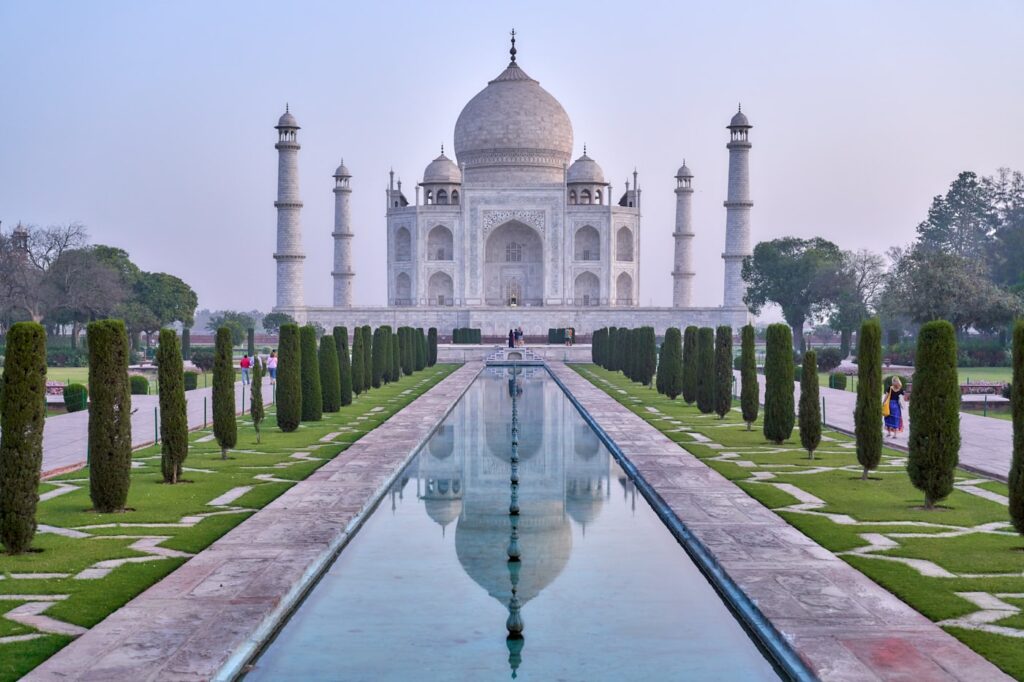
Not everything in India is cheap, and it’s worth planning around the few things that aren’t. Entry fees for major sites like the Taj Mahal carry a significantly higher price for foreign visitors than for Indian nationals — budget for this rather than being surprised by it. Visas, travel insurance, and any flights within the country (sometimes faster and cheaper than expected on routes like Delhi–Goa) are worth booking ahead rather than scrambling for last-minute prices.
A reasonable daily budget outside of these big-ticket items, covering a hostel bed, three meals, and local transport, sits comfortably between $15 and $25 a day in most of the country — lower in smaller towns, higher in tourist hubs like Goa or Jaipur during peak season.
The Trade-Off, If You Can Call It That
Budget travel in India isn’t always comfortable. Trains run late. Rooms don’t always have hot water, or sometimes any water at all for a stretch of the afternoon. Plans get rearranged by festivals, monsoons, or a bus that simply doesn’t show up. Patience isn’t optional here — it’s part of the cost of admission.
But somewhere between the chaos and the cheap thrills, India has a way of teaching budget travelers that the price of a trip and the value of it are rarely the same thing. The traveler counting rupees at a street stall is often having a richer day than the one counting stars on a hotel review. That’s the real bargain India offers: not just a cheap trip, but often a better one.